Category:
EconomyNgultrum Hits Record Low at Nu 95 per US Dollar
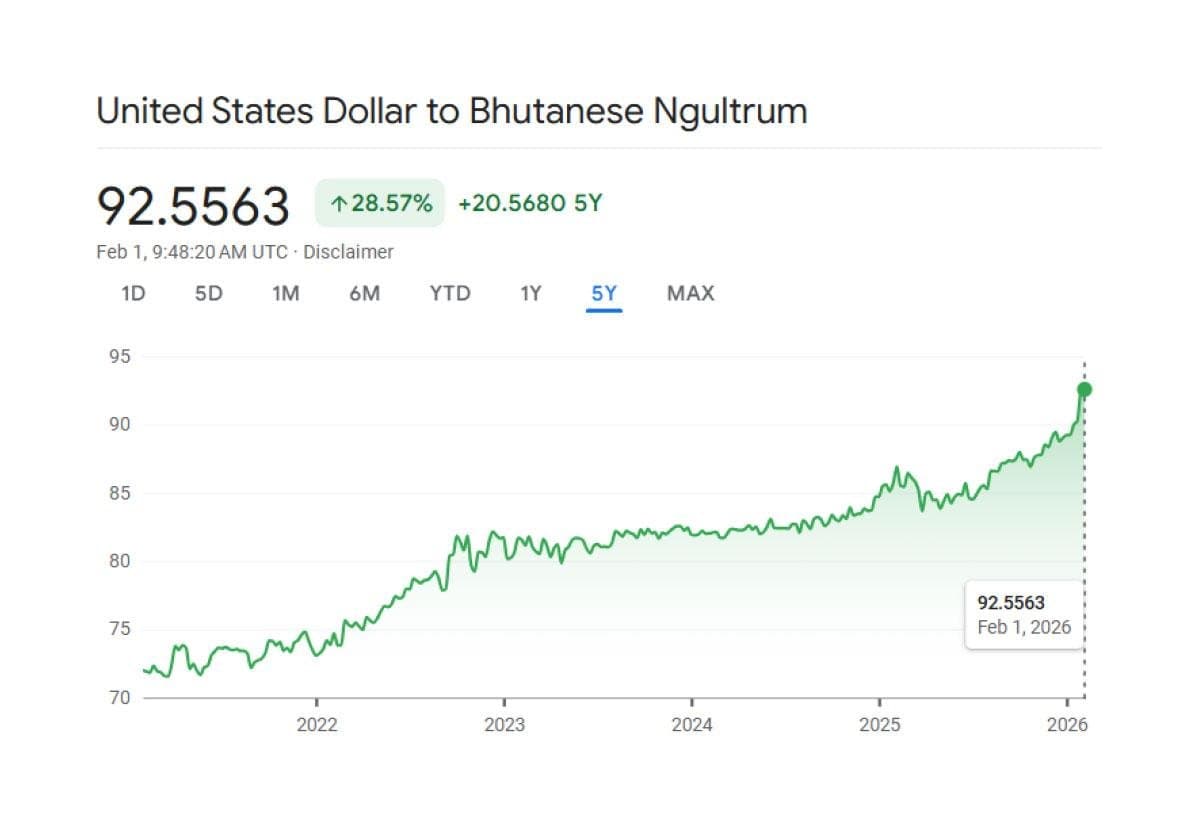
The Bhutanese Ngultrum has reached a historic low against the US dollar, sliding to Nu 95. This depreciation, a cause for concern among economic analysts, reflects broader global economic trends and domestic challenges.
Understanding the Ngultrum's Decline 💼📉
The Ngultrum's depreciation by 7.98% over the past year highlights significant economic pressures on Bhutan. This decline is primarily driven by rising crude oil prices, persistent trade deficits, and Bhutan’s reliance on the Indian rupee, to which the Ngultrum is pegged. Since 1974, any fluctuations in the Indian rupee have directly impacted the Ngultrum, reflecting shared economic vulnerabilities.
Global Economic Pressures 🌎💥
Bhutan's economic landscape is not isolated; it is deeply intertwined with global economic dynamics. The recent surge in crude oil prices has amplified Bhutan's import bills, increasing demand for the US dollar. Concurrently, geopolitical tensions, notably in the Middle East, have bolstered the dollar's strength while weakening emerging-market currencies like the rupee.
For Bhutan, this translates into higher fuel costs, which not only widen the current account deficit but also add to domestic inflationary pressures. This creates a feedback loop, further depreciating the Ngultrum.
Domestic Implications 📊🇧🇹
The consequences of a weaker Ngultrum are multifaceted. Rising import costs strain Bhutan's economy, particularly in sectors reliant on imported raw materials. However, a weaker currency may enhance export competitiveness, potentially benefiting Bhutan's trade balance.
In 2024, imports from third countries, conducted in convertible currencies, surged to Nu 79.9 billion. Export growth, though notable, remains modest in comparison, highlighting the need for strategic economic reforms.
Policy Recommendations 📝
Economists caution against complacency. Targeted support for vulnerable households is recommended, along with preserving price signals. The Royal Monetary Authority is urged to enhance swap arrangements with India to buffer external shocks.
Capital spending should be prioritized, deferring projects with high dollar demands. Structural reforms, including tax restructuring and export diversification, are crucial for long-term stability. Delays in hydropower projects are particularly concerning, as they exacerbate revenue losses and debt burdens.
Broader Economic Context 🌐📈
The depreciation of the Ngultrum is part of a broader trend of a strengthening US dollar globally. The Ministry of Finance notes that the USD exchange rate has been on an upward trajectory, reflecting sustained depreciation of the Ngultrum.
Efforts by the Reserve Bank of India to stabilize the rupee may offer some relief. A recent circular limits banks' foreign exchange exposure, potentially curbing further depreciation of the rupee and, by extension, the Ngultrum.
Conclusion and Outlook 🔍🔮
As Bhutan navigates these economic challenges, a proactive approach is essential. Strengthening economic policies, pursuing structural reforms, and fostering resilient trade strategies are vital. Bhutan’s journey towards economic stability requires vigilance, adaptability, and strategic foresight.
In a rapidly evolving global economy, Bhutan's ability to manage currency volatility will be pivotal in shaping its economic future.