Category:
EnvironmentBhutan's Climate: A Growing Warming Risk
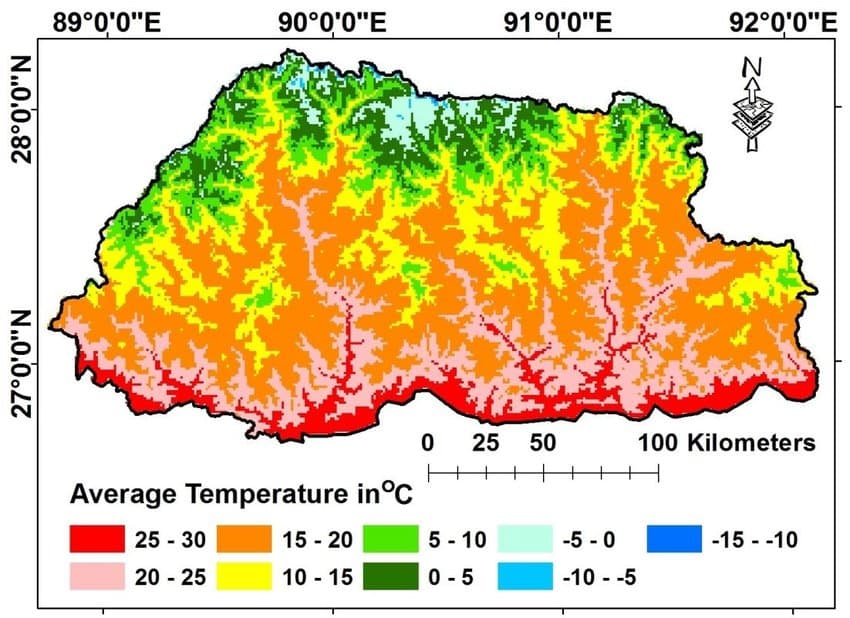
Bhutan's Warming Reality 🌡️
Bhutan, nestled in the eastern Himalayas, is witnessing a gradual rise in temperatures that poses a significant risk to its ecological and societal structures. While this small kingdom contributes minimally to global emissions, the impacts of climate change are becoming increasingly evident. 🌍
Climate Shifts and Temperature Trends 📈
Between December 2025 and February 2026, global data indicated that around 1.4 billion people experienced temperatures exacerbated by climate change. Although Bhutan did not register extreme heat during this period, the probability of such events is growing. Seasonal temperature anomalies averaged 1.7°C during the winter months, with Thimphu experiencing a deviation of 1.9°C. These shifts, though subtle, can strain Bhutan's water resources, agriculture, and public health. 💧
Oceanic Changes and Glacier Concerns 🏔️
Oceans, which absorb 91% of excess heat, have reached unprecedented temperatures. This has accelerated glacier melt, posing a threat to Bhutan's 700 glaciers and over 500 glacial lakes. These glaciers are vital for sustaining river systems, contributing significantly to surface river flow, which is essential for agriculture and hydropower. 📊
Rainfall and Agricultural Impact 🌾
Bhutan's climate, influenced by its complex topography, shows distinct seasonal variations. The southwest monsoon, occurring from June to September, governs rainfall patterns. However, recent data revealed a below-average rainfall of 1,161 mm, while temperatures remained above normal at 22.8°C. Such anomalies affect crop yields, especially for subsistence farmers who rely heavily on consistent weather patterns. 🌧️
Projected Climate Changes 🔍
Climate projections under a moderate emissions scenario suggest Bhutan's annual mean temperature could rise by 0.8°C to 1.6°C by mid-century, reaching up to 2.8°C by 2100. Under a high-emissions scenario, temperatures could soar beyond 2.8°C, with seasonal extremes climbing as high as 5.6°C. Highland regions are likely to experience pronounced warming, particularly during spring and winter. 🌡️
Broader Implications of Warming 🌐
The broader implications of Bhutan's warming trend extend beyond environmental concerns. Rising temperatures intensify heat stress for outdoor workers and expand the reach of vector-borne diseases like dengue. The World Health Organization estimates that half the global population is now at risk from such diseases, with cases at record highs. 🦟
Bhutan's Path Forward 🚀
Despite its negligible contribution to global emissions, Bhutan faces the challenge of adapting to a warming climate. As greenhouse gas concentrations continue to rise, Bhutan must focus on sustainable practices and policies to mitigate climate impacts. This includes enhancing agricultural resilience, securing water resources, and investing in renewable energy. 🌱
Conclusion: Preparing for the Future 🌟
As Bhutan navigates the challenges of climate change, the emphasis must be on strategic adaptation and sustainable development. By addressing the growing risks of gradual warming, Bhutan can safeguard its environment and ensure a resilient future for its people. 🌿